
The reason Spin Dynasty Casino Cache Management Functions Efficiently Canada Technical View
- 5 julio, 2026
- Coraz
- No comments
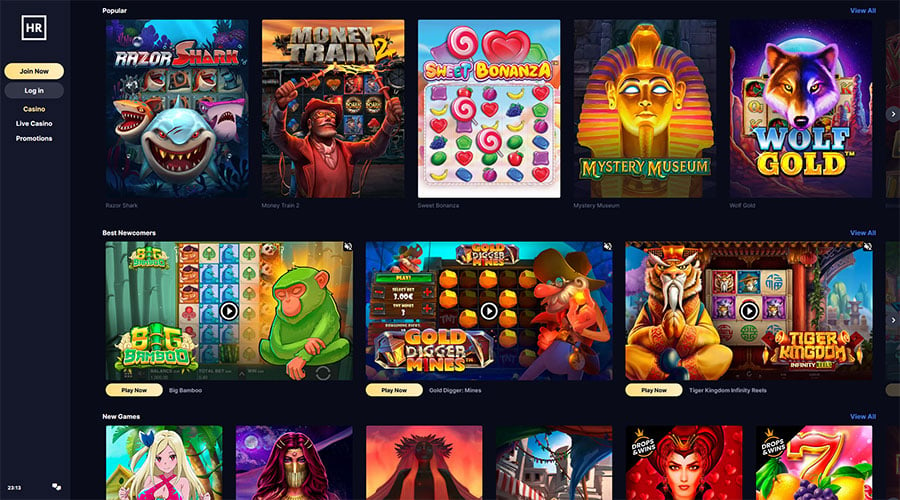
Each time a user fires up a live blackjack table or activates a featured slot at Spin Dynasty Casino, a chain of caching decisions activates before the first pixel hits the screen. We’ve spent years optimizing that chain so it handles millions of requests without impacting gameplay, without serving a stale jackpot value, and without tampering with the regulatory-grade data integrity our platform operates on. The heavy lifting takes place deep inside browsers, across edge nodes, and between internal microservices, all geared to make sessions feel instant while keeping real-money transactions locked tight. Our rule is clear: cache without fear wherever the data supports, flush with surgical precision when something updates, and never let a leftover fragment sneak into a payout calculation. This article details the scaffolding that makes that possible—browser heuristics, CDN topology, dynamic fragment assembly, and targeted invalidation—so the lobby, game loader, and cashier all move at the speed players anticipate.

The Basis of Intelligent Caching at Spin Dynasty
Design Principles That Govern Our Cache Layer
The caching layer relies on three constraints that ensure performance high and risk low. Every cache entry features an authoritative time-to-live that matches the volatility of the data behind it, not some blanket number. A set of promotional banners may stay for ten minutes, while a player’s account balance never enters a shared cache. Reads scale effortlessly because fallback strategies always provide a functional response, even when the origin is temporarily down. A game category page loads from edge cache with a slightly older price tag while the backend rebuilds, instead of showing a blank spinner. Every write path triggers targeted invalidation events that purge only the smallest slice of cache that actually changed. We never flush whole regions just because one game’s RTP label got updated. These principles drive every tool choice, from the header sets we send down to the structure of our Redis clusters.
Dividing Static from Dynamic Requests
The front-end stack blends asset fetches, API calls, and WebSocket streams, and we handle each category differently long before the client views them. Static assets—game thumbnails, CSS bundles, font files—get fingerprint hashes baked into their URLs and immutable Cache-Control directives that let browsers and CDNs store them for good. That eliminates revalidation requests on repeat visits. API responses that contain game metadata, lobby rankings, or promotional copy get shorter max-age values paired with stale-while-revalidate windows, so the player obtains near-instant content while a fresh copy loads in the background. Requests that mutate state—placing a bet or redeeming a bonus—skip caching entirely. Our API gateway checks the HTTP method and endpoint pattern and strips all cache-related headers when it needs to, making it impossible to accidentally cache a wallet mutation and guaranteeing that performance tweaks never cause financial discrepancies.
The way Browser‑Side Caching Speeds Up Every Session
Service Worker Magic for Offline‑Resilient Game Lobbies
A tightly scoped service worker runs on the main lobby domain, handling navigation requests and providing pre-cached shell resources. It does not affect game-session WebSockets or payment endpoints, so it stays invisible to transactional flows. Once someone loads the lobby once, the shell—header bar, footer, navigation skeleton—loads from local cache before any network call ends. During idle moments, a background sync queue caches in advance the top twenty game tile images. A player returning on a shaky mobile connection sees a lobby that’s immediately navigable, with featured slot tiles appearing without placeholder shimmer. The service worker adheres to a versioned manifest that updates with each deployment, enabling the team push a new lobby shell without requiring anyone to clear their cache. Real User Monitoring sets lobby load times on repeat visits below 150 milliseconds.
Optimized Cache‑Control Headers for Repeat Visits
Outside the service worker, accurate Cache-Control and ETag negotiation eliminate redundant downloads https://spindynasty.ca. Every reusable response obtains a strong ETag built from a content hash. When a browser sends an If-None-Match header, our edge servers respond with a 304 Not Modified without transferring the body. For API endpoints that change infrequently—like the list of available payment methods per jurisdiction—we configure a public max-age of six hundred seconds and a stale-while-revalidate of three hundred seconds. That lets the browser reuse the cached array for up to ten minutes while quietly refreshing it when the stale window activates. We refrain from must-revalidate on these read endpoints because that would stop the UI if the origin became unreachable. Instead, we tolerate that a promotional badge might appear an extra minute while the fresh value arrives. We watch that trade-off closely through client-side telemetry. This header strategy alone cut cold-start lobby load times by forty percent compared to our original no-cache defaults.
Intelligent Cache Invalidation Minimizing Disrupting Live Games
Event‑Driven Purging Triggered by Backend Signals
Moving away from time-based expiry alone, we connected the content management system and the game aggregation service to emit invalid events. When a studio adjusts a slot’s minimum bet or the promotions team updates a welcome bonus banner, the backend dispatches a message to a lightweight event bus. Cache-invalidation workers monitor those topics and issue surrogate-key purges that affect only the affected CDN objects and internal Redis keys. One change to a game tile starts a purge for that specific game’s detail endpoint and the lobby category arrays that point to it—nothing else. We never wildcard-purge, which can evict hundreds of thousands of objects and cause a latency spike while the cache reloads again. The workflow is synchronous enough that the updated value becomes visible within five seconds, yet decoupled enough that a temporary queue backlog doesn’t hinder the publishing service. Marketing agility and technical stability work together naturally this way.
Partial Invalidation During Active Wagering Windows
Live roulette and blackjack tables are tricky: the visual table state changes with every round, but structural metadata—dealer name, table limits, camera angles—can stay static for hours. We divide these into separate cache entries and apply soft invalidation to the dynamic layer. When a round finishes, the dealer system sends a new game state hash, and the API gateway generates a fresh cache key. The old key stays active for an extra ten seconds so players still rendering the previous round avoid a blank screen. A background process removes the old key once all connections referencing it have expired. The game feed remains seamless, without the jarring frame drop that abrupt purges can trigger. The static metadata layer uses a longer TTL and a webhook that only clears when the pit boss modifies table attributes, so a hundred rounds an hour don’t generate unnecessary purge traffic.
Intelligent Content Caching That Responds to Player Behavior
Customized Lobby Tiles Without Reconstructing the World
Caching a fully customized lobby for every visitor would be inefficient because most of the page is identical. Instead, we split the lobby into edge-side includes: a static wireframe with placeholders, and a lightweight JSON document per player that holds proposed game IDs, wallet balance, and loyalty progress. The CDN holds the wireframe globally, while the customized document is retrieved from a regional API cluster with a short TTL of fifteen seconds. The browser assembles the final view through a tiny JavaScript boot loader. We then added a hybrid step: pre-assemble the five most common recommendation sets and save them as full HTML fragments. When a player’s personalized set matches one of those templates, the edge serves the fully cooked fragment directly, skipping assembly and reducing render time by thirty percent. This mirroring technique learns from request analytics and renews the template selection hourly, adjusting to trending games and cohort preferences without any operator lifting a finger.
Proactive Prefetching Based on Session History
We don’t depend on a click. A dedicated prefetch agent works inside the service worker and looks at recent session history: which provider the player launched last, which category they browsed, and the device’s connection type. If someone lingered in the “Megaways” category, the worker quietly downloads the JSON configuration for the next five Megaways titles during idle gaps. On a strong Wi‑Fi connection, the agent also prepares the initial chunk of JavaScript for the game client and the most common sound sprite. All prefetched data is stored in the Cache API with a short-lived TTL so stale artifacts disappear. When the player clicks a tile, the launch sequence often finishes in under a second because most of the assets are already local. We set the prefetch scope conservative to avoid wasted bandwidth, and we honor the device’s data-saver mode by deactivating predictive downloads entirely—a small move that matters for players who monitor their cellular data closely.
Managing Novelty and Velocity in Random Number Generator and Live Dealer Feeds
Caching Rules for Result Disclosures
RNG slot results and table game results are determined on the supplier end and delivered to our platform as authenticated messages. Those data packets must be displayed exactly once and in proper order, so we handle them as ephemeral streams, not storable items. The interface elements—spin button states, sound effect indices, win celebration templates—shifts far less often and profits from intensive caching. We version these files by game build number, which is updated only when the developer releases a new build. Until that version change, the CDN holds the entire asset bundle with an infinite cache directive. When a version update takes place, our deployment process uploads new resources to a fresh directory and issues a unique invalidation notice that replaces the version reference in the game bootstrapper. Old assets stay available for current sessions, so no spin gets interrupted mid-round. Gamers get no asset-loading delay during the key spin moment, and the latest game art waits for them the subsequent time they open the game.
Guaranteeing Real‑Time Feeds Stay Responsive
Live dealer video streams run over low-latency transport, so regular HTTP caching doesn’t apply to the media stream. What we improve is the messaging and chat system that works alongside the stream. Edge-located WebSocket gateways keep a small buffer of the last few seconds of chat entries and table state updates. When a user’s link drops briefly, the server replays the stored messages on re-establishment, creating a impression of seamlessness. That store is a temporary memory cache, never a long-term database, and it resets whenever the game state transitions between games so stale bets don’t replay. We also implement a brief edge cache to the list of active tables that the lobby checks every several seconds. That tiny cache soaks up a huge volume of duplicate queries without impacting the central dealer platform, which keeps fast for the critical bet-placement commands. The effect: conversation threads that seldom lag and a table list that updates fast enough for gamers to catch freshly available tables within a few heartbeats.
Content delivery network and Edge caching Tactics for Global Players
Choosing the Correct Edge sites
Spin Dynasty Casino runs behind a tier-1 CDN with more than two hundred points of presence, but we do not handle every location the identical. We plotted player distribution, latency standards, and transcontinental routing fees to pick origin shield regions that protect the central API farm. The shield sits in a big metro where multiple undersea cables meet, and all edge caches pull from that shield in place of hitting the origin directly. This minimizes request aggregation for frequent assets and halts cache-miss surges during a recent game release. For instant protocols like the WebSocket communication that live dealer tables use, the CDN serves only as a TCP relay that closes connections adjacent to the player, while real game state stays fixed in a principal regional data facility. Splitting tasks this fashion gets sub-100-millisecond time-to-first-byte for buffered static JSON payloads across North America, Europe, and sections of Asia, with persistent sessions staying consistent.
Stale while revalidate: Keeping Content Current With no Latency Jumps
Stale-while-revalidate with prolonged grace windows on non-transactional endpoints transformed the game for us. When a player visits the promotions section, the edge node provides the cached HTML fragment right away and sends an asynchronous request to the origin for a new instance. The new copy overwrites the edge repository after the reply comes, so the subsequent player encounters new content. If the origin becomes slow during peak traffic, the edge continues serving the old object for the full grace period—thirty minutes for marketing copy. A individual slow database request does not spreads into a site-wide failure. We monitor the async refresh latency and trigger alerts if refreshing fails to renew within two back-to-back windows. That signals a more profound problem without the player ever seeing. This approach raised our availability SLO by half a percent while maintaining content timeliness within a handful of minutes for many marketing modifications.
Under the Hood: Our Approach to Measuring Cache Effectiveness
Primary Metrics We Follow Across the Stack
We monitor every tier of the caching pipeline so choices come from evidence, not guesses. The following indicators are sent to a unified observability platform that engineers review daily:
- CDN hit ratio split by asset type and region, with alerts if the global ratio drops below 0.92 for static resources.
- Origin-shield offload percentage, which tells us how much traffic the shield blocks from hitting the internal API fleet.
- Stale-serve rate during revalidation windows, quantified as the proportion of requests handled from a stale cache entry while a background fetch is active.
- Service worker cache hit rate on lobby shell resources, obtained via client-side RUM beacons.
- Invalidation latency—the time gap between an event publication and the completion of surrogate-key purge across all edge nodes.
- Cache-miss cold-start time for game loader assets per continent, broken into DNS, TCP, TLS, and response body phases.
These numbers give us a accurate view of where the caching architecture performs well and where friction exists, such as a particular region with a low hit ratio generated by a routing anomaly.
Ongoing Optimization Using Synthetic and Real User Monitoring
Metrics alone fail to show how a player actually experiences things, so we layer on with synthetic probes that simulate a full lobby-to-game journey every five minutes from thirty globally distributed checkpoints. The probes trace real user paths: landing on the lobby, browsing a category, launching a slot, and checking the cashier. They measure Lighthouse performance scores, Largest Contentful Paint, and Cumulative Layout Shift triggered by cached elements reflowing. At the same time, real user monitoring captures field data—specifically the timing of the first lobby tile to become clickable and the length between the game-launch tap and the first spin button becoming visible. When a regression surfaces, we cross-reference it with the cache hit ratio and stale-serve telemetry to identify whether an eviction spike, a slow origin, or a CDN configuration drift caused it. That feedback loop lets us adjust TTLs, prefetch lists, and edge-include strategies every week, maintaining the caching system aligned exactly with how players actually move through Spin Dynasty Casino’s always-evolving game floor.
Leave a Comment